
ESG reporting requirements are expanding rapidly. Frameworks such as the Corporate Sustainability Reporting Directive (CSRD) introduce new data requirements, governance structures and responsibilities across organisations.
But in many companies, ESG knowledge is scattered across teams, documents and systems. Finance, sustainability, HR, procurement and operations all contribute data, often without a shared structure for definitions, methodologies or responsibilities.
Without a clear framework, ESG reporting quickly becomes fragmented and difficult to manage. The result?
- Unclear ownership of ESG metrics
- Different interpretations of reporting requirements
- Data coming from multiple departments
- Inconsistent documentation of methodologies
- Difficulties explaining figures during audits or assurance reviews
A STRUCTURED ESG REPORTING MANUAL
The Fidugius ESG Reporting Manual centralises your ESG reporting framework in one structured and accessible platform. It allows organisations to clearly document their ESG objectives, policies, metrics and methodologies, while providing employees with practical guidance on how ESG data should be recorded and reported.
The result is one single source of truth for ESG reporting across the organisation. Employees can rely on up-to-date guidelines, strong search functionality and an intuitive structure to quickly find the information they need.
The Fidugius platform brings together the key elements of your ESG reporting framework.
- ESG REPORTING POLICIES: Documentation of sustainability reporting principles based on applicable frameworks and standards. Example: How to consider acquisitions and disposals in your KPI reporting.
- ESG ACCOUNTING TREATMENTS: Practical guidance on how ESG data should be collected, calculated and recorded across business processes. Example: Recording greenhouse gas emissions generated by operational activities.
- KPI’S: he KPI’s and their methodology on the definition of the KPI, how it is measured in what system and by what accounting & reporting process. Example: Energy consumption from nuclear sources.
- COST CENTERS: The areas within a company used for alloaction. Example: Allocation of emissions related to product distribution to the logistics function.
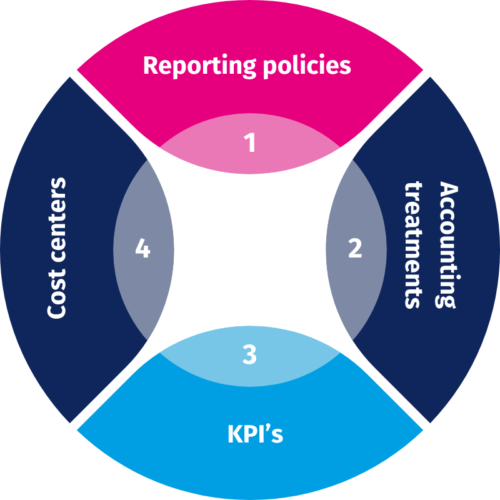
By connecting these elements in one structured knowledge environment, organisations ensure that ESG data is recorded and reported consistently.
BUILT FOR COMPLEX ESG ENVIRONMENTS
The Fidugius ESG Reporting Manual is designed for organisations that must coordinate ESG reporting across multiple functions and entities. Typical environments include:
- Organisations reporting under CSRD / ESRS frameworks
- International groups with multiple reporting entities
- Companies preparing for external ESG assurance
- Organisations coordinating ESG data across finance and operational teams
The platform ensures that everyone involved in ESG reporting works from the same definitions, methodologies and documentation.
RELIABLE AND AUDITABLE ESG REPORTING
With the Fidugius ESG Reporting Manual, organisations achieve:
- Consistent ESG reporting across the organisation
- Clear ownership of ESG data and responsibilities
- Well-documented methodologies for metrics and KPIs
- Better preparation for audits and assurance processes
- More efficient ESG reporting cycles

FAST AND RELIABLE REPORTING ON ESG RESULTS HAS NEVER BEEN EASIER.
FLEXIBLE DEPLOYMENT
The Fidugius ESG Reporting Manual runs in your own SharePoint tenant. It evolves continuously through product development and client feedback, keeping pace with the changing ESG reporting landscape.
-
 Lees verder
ISSB
The Trustees of the IFRS Foundation announced the formation of the International Sustainability Standards Board (ISSB) on 3 November 2021,... -
 Lees verder
IASB
The IASB is responsible for the development and publication of IFRS Accounting Standards. The IFRS Accounting Standards provide for a... -
 Lees verder
IFRS Foundation
To ensure information is presented in a consistent and transparent manner, is comparable and enforceable, standards are issued by organisations,... -
 Lees verder
How to ensure reliable ESG reporting?
Listed and large companies are preparing themselves for reliable reporting on environmental, social and governance (ESG) matters following the EU’s... -
 Lees verder
IFRS 18 in practice
IFRS 18 is effective from 1 January 2027, but preparation starts now. IFRS 18 Presentation and Disclosure in Financial Statements...
