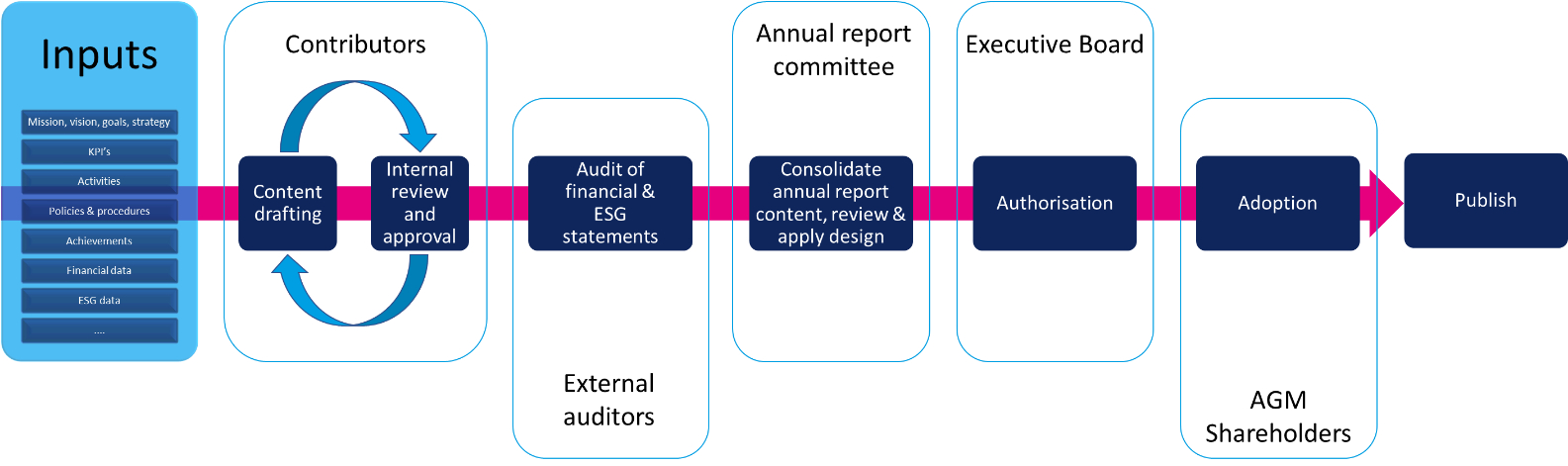
Collecting all the necessary information requires preparation. Those who contribute to the content of the annual report must ensure that the data is available, accurate and consistent with sections prepared by other contributors. Multiple rounds of corrections are usually required to achieve a stable document that best reflects the company’s position and perspective.
However, this is not a one-time recurring event. Having reliable data to disclose all starts with the timely and accurate registration of every transaction throughout your organisation.
ANNUAL REPORT AUDIT
For most organisations, the financial statements within the annual report are subject to an independent audit. The external auditor reviews the company’s accounting policies, processes and underlying records to form an opinion on whether the financial statements give a true and fair view of the company’s financial position and performance.
In recent years, the scope of the annual report audit has expanded significantly. Auditors are increasingly required to issue an opinion on ESG disclosures and reporting as well, initially for listed companies, but this requirement is extending to a broader group of organisations in line with CSRD and related regulations. This means that both financial and sustainability data must be well-documented, internally consistent and traceable back to underlying sources.
Preparing for an annual report audit is considerably easier when accounting policies are clearly documented, consistently applied and accessible to the teams responsible for preparing the data. Recurring audit findings often point to the same root cause: guidance that exists in principle but is not embedded in daily practice.